Cookie Scanner & Compliance Monitoring Software
Opt for better visibility. Know exactly what's happening on your websites.

Cookie Scanner & Compliance Monitoring Software
Opt for better visibility. Know exactly what's happening on your websites.

Why enterprises opt for better
compliance monitoring with Didomi
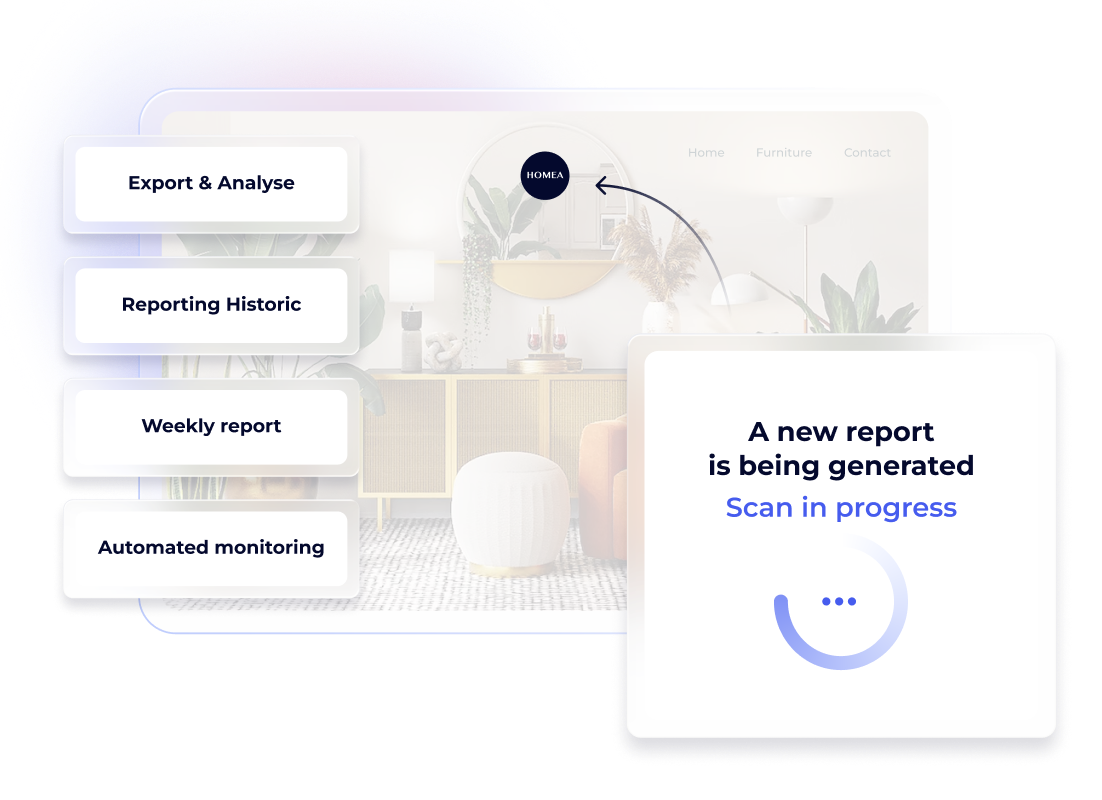
The digital ecosystem still operates like the Wild West: integrations happen opportunistically, vendors come and go, and no one really knows what's running on the site. Didomi's website scanner gives you back control with continuous, automated monitoring built for enterprise scale and compliance with US, EU, and global privacy law.
Visibility
Map every vendor and tracker on your site
See every cookie, tag, and third-party request running on your sites and get alerted the moment something changes, breaks, or leaks."
Efficiency
Stop chasing problems, start preventing them
Track and report on privacy behaviors automatically. Stop unauthorized vendors from harming performance and reclaim the hours your team spends debugging tag managers.
Compliance
Audit-ready, every scan
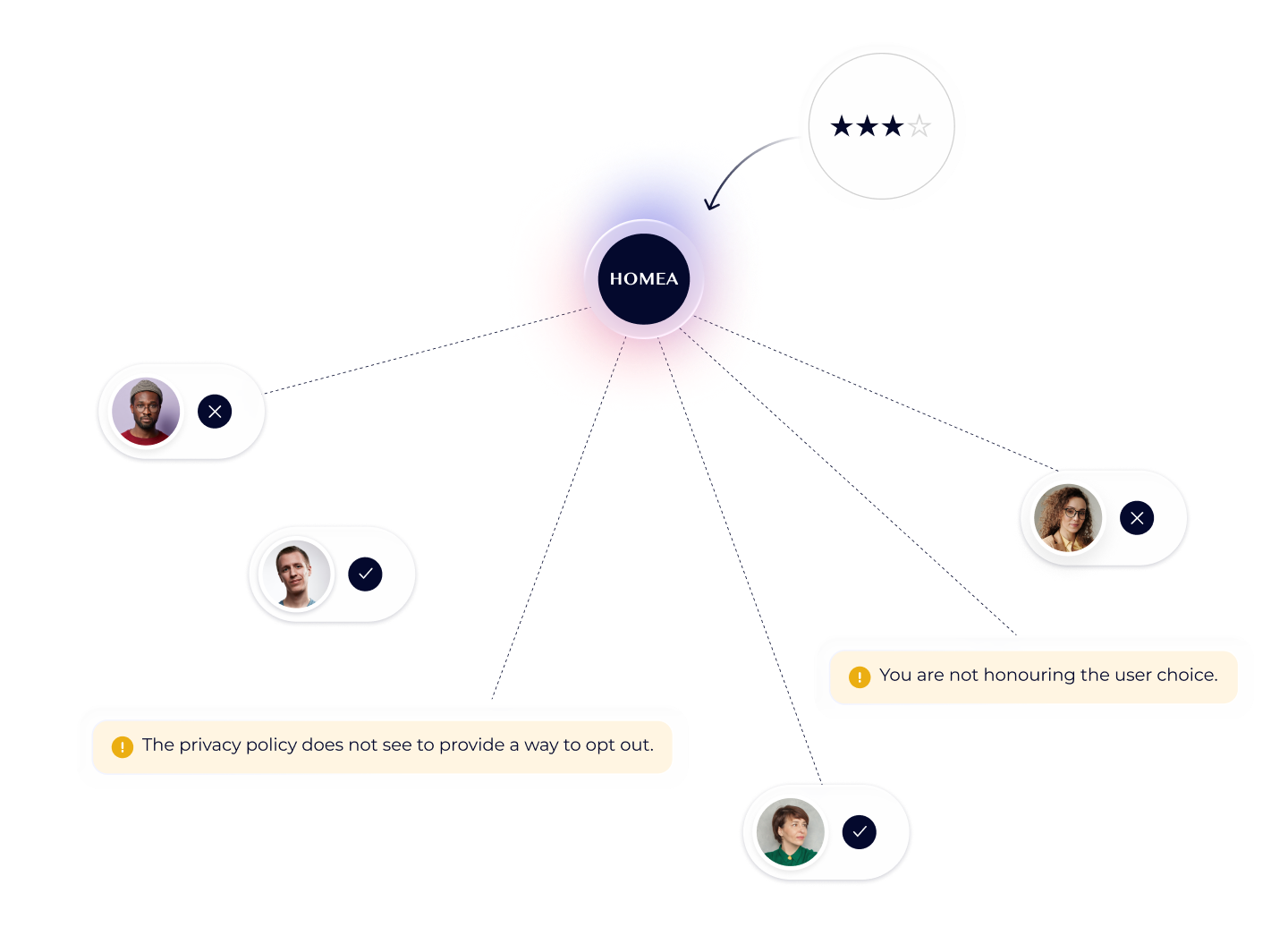
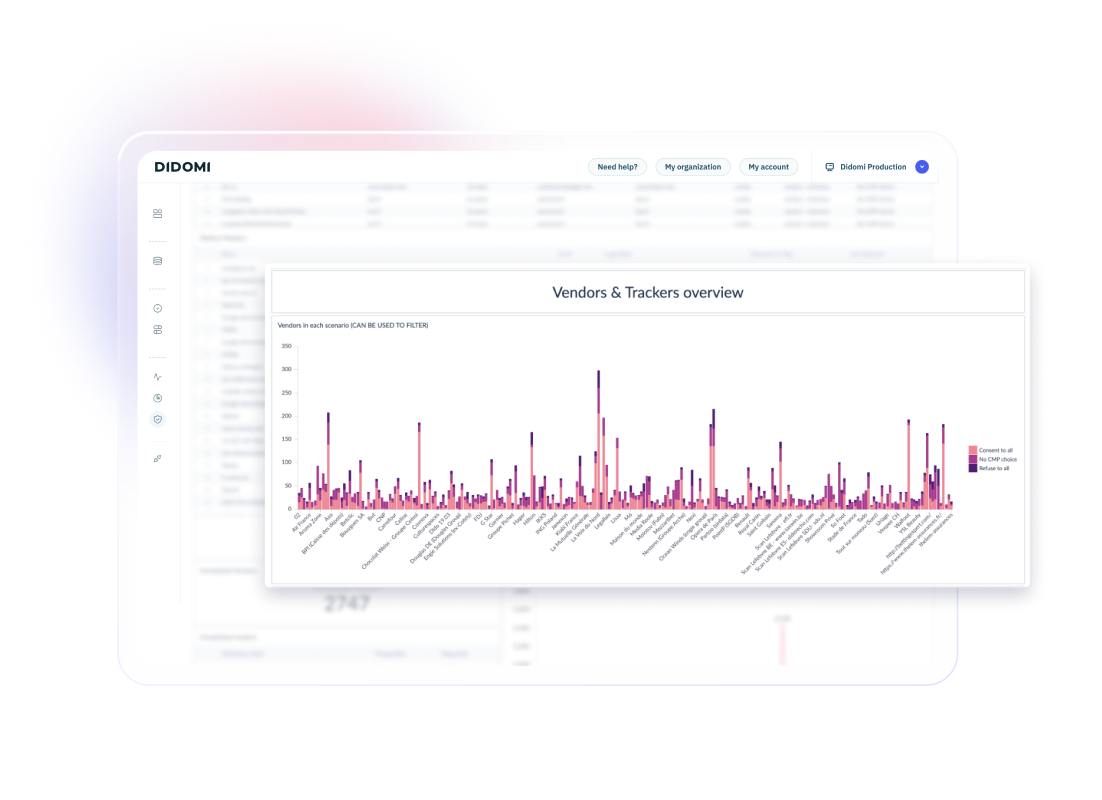
Monitor hundreds of websites at once. Verify that your banner behaves exactly as configured for accept-all, refuse-all, and no-action scenarios and run risk assessments on every vendor you load.








Test what regulators
actually test
Realistic compliance, no guesswork
ACM simulates how real users interact with your banner and reveals whether your setup behaves exactly as it should. These simulations expose hidden cookies and misfiring scripts so you can find and fix non-compliance issues before regulators or class-action attorneys do.
Always-on compliance monitoring
Continuous compliance, automated
Automated monitoring
Track and report on privacy behaviors across every site you run. Customize scan frequency (daily, weekly, or monthly) so your privacy setup stays under control whether you manage one domain or hundreds.
Exports & analysis
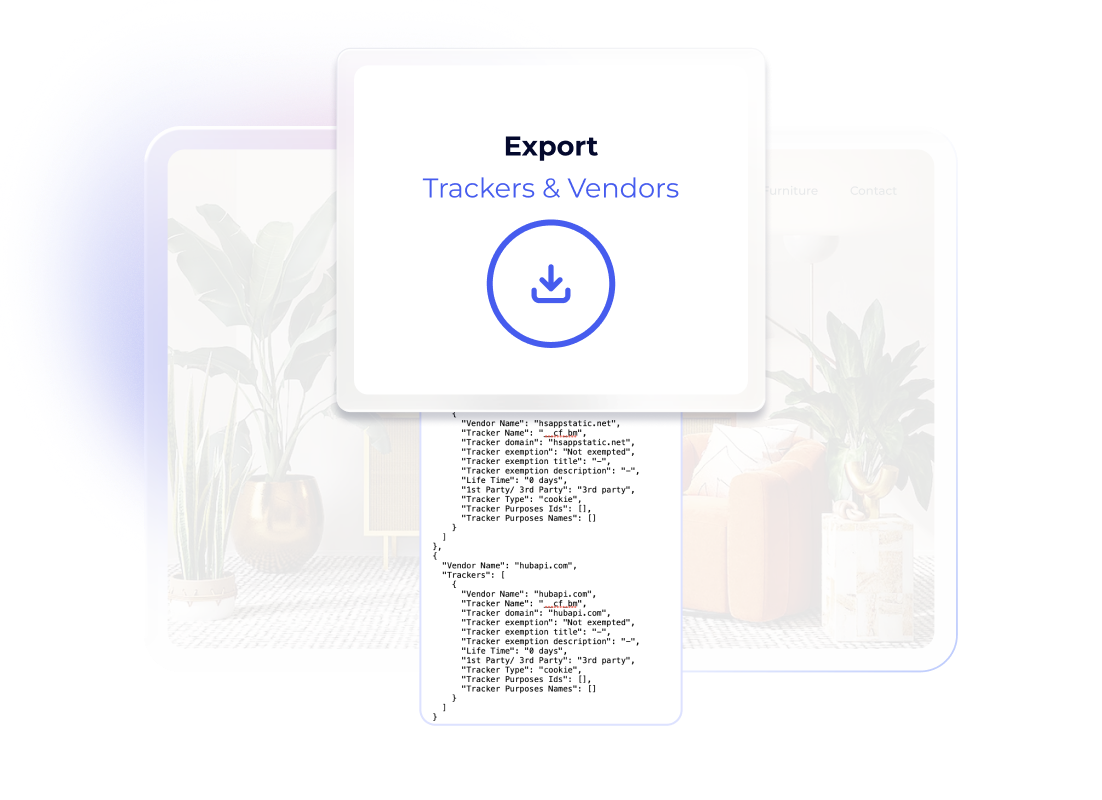
Build privacy governance on facts, not assumptions. Export full vendor and tracker data in JSON to keep your cookie and privacy policies accurate to what your site actually does.
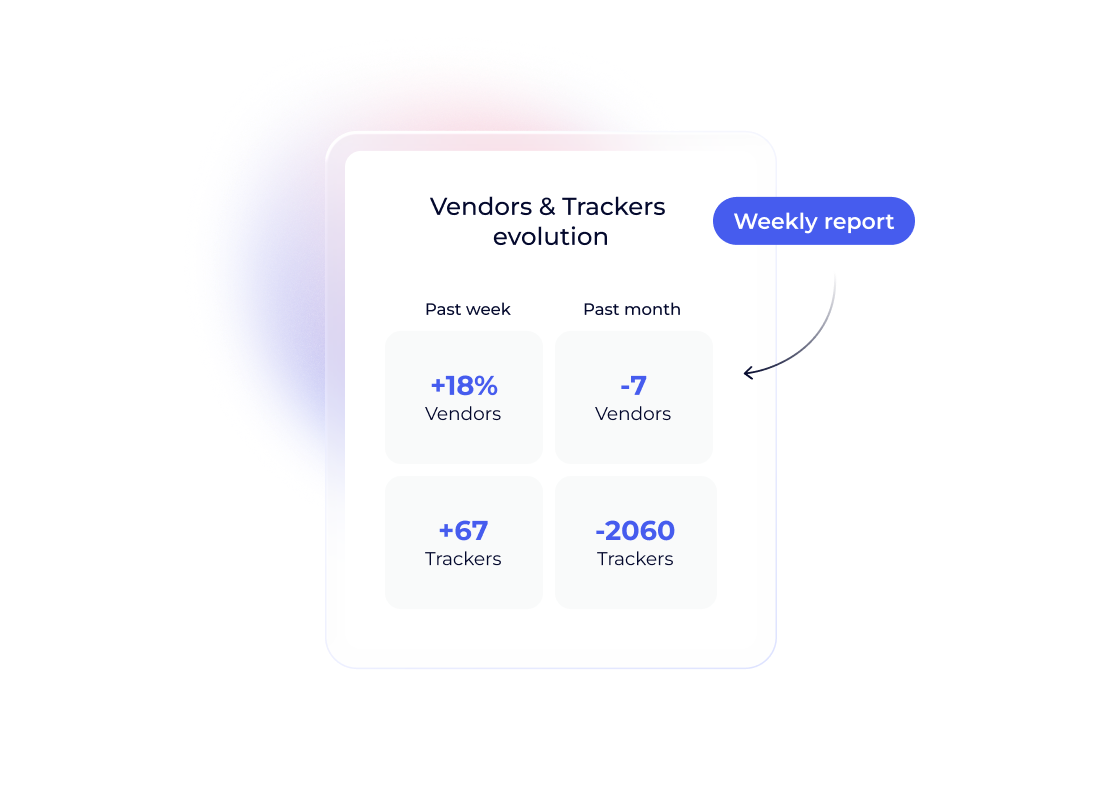
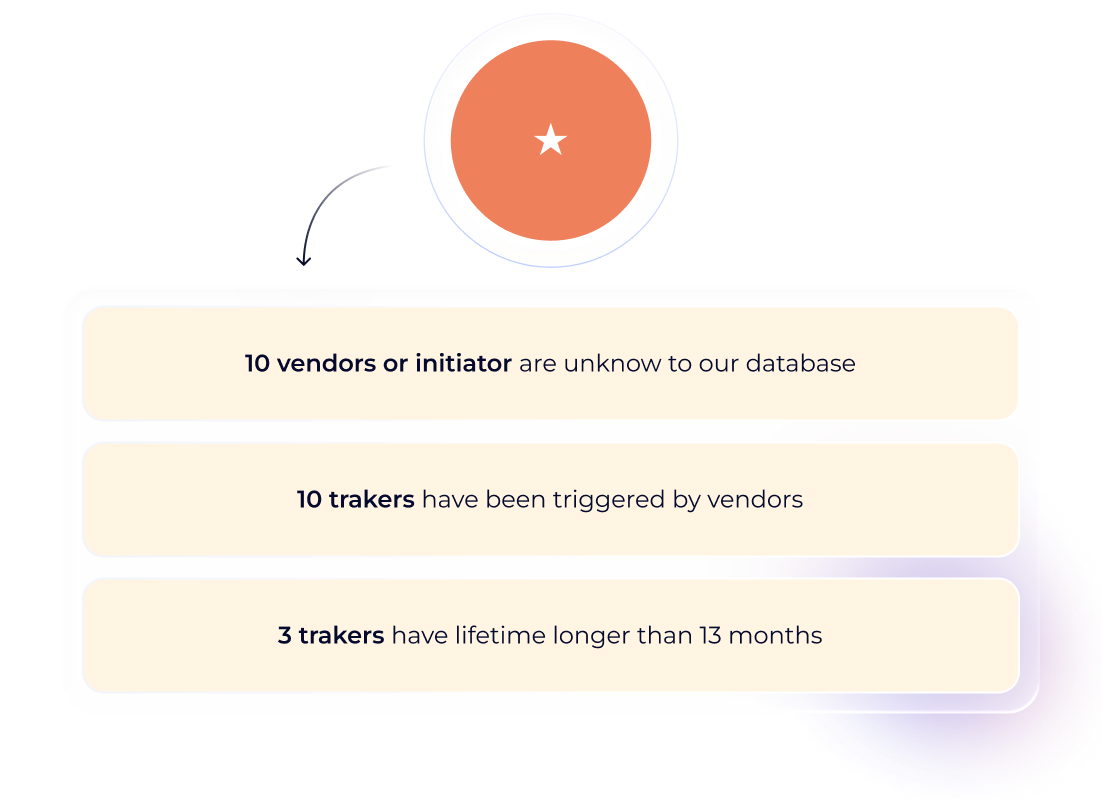
Weekly alerts
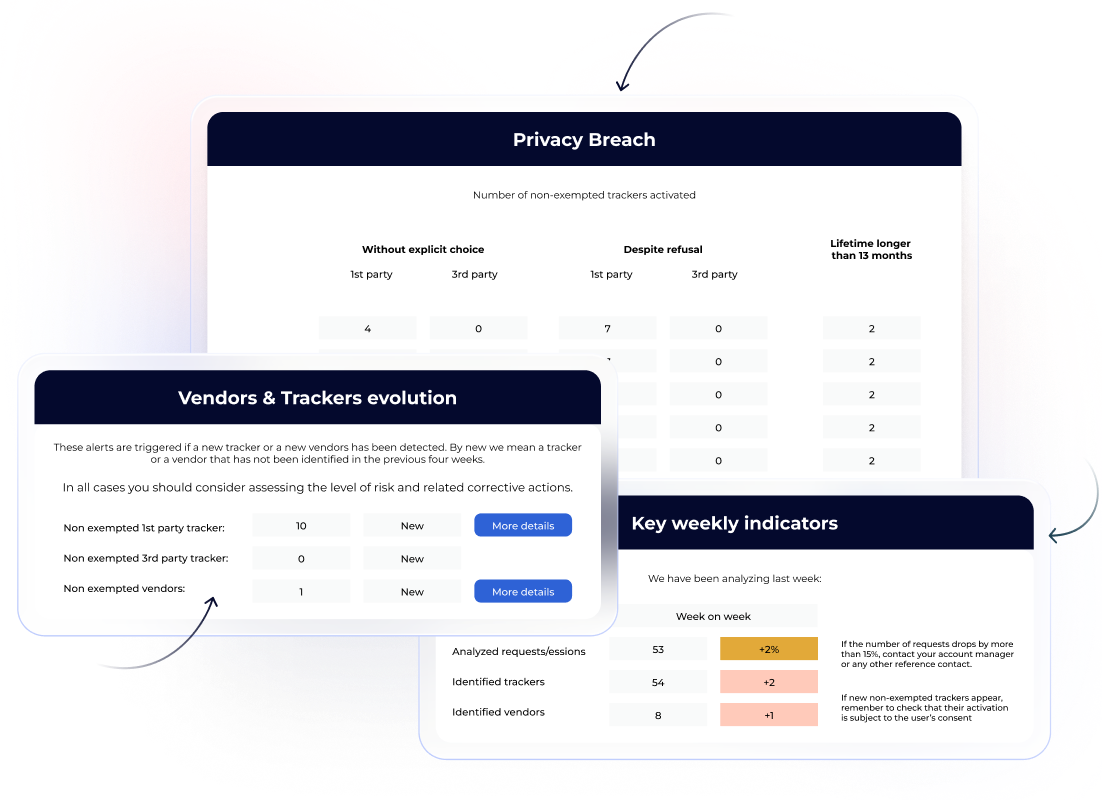
Get proactive signals on misfiring tags, sudden vendor mismatches, and new tracker activity, before they impact compliance or user trust.
CMP synchronization & vendor matching
ACM identifies missing or misclassified vendors, broken SDK integrations, and incorrectly implemented tags closing the most common gaps that put compliance at risk.
Historical compliance reporting
Track how your compliance posture evolves over time. Visualize trends, identify CMP discrepancies, and demonstrate due diligence to regulators with a clean, time-stamped audit trail.

Opt for better
compliance monitoring
Ready to see exactly what's running on your sites?
Joshua Revan, our Director of Global Strategic Accounts,
will be happy to help.
Frequently Asked Questions (FAQ)
What is a cookie scanner and how does it work?
A cookie scanner is an automated tool that maps every cookie, tag, and third-party request running on your website. Didomi's Advanced Compliance Monitoring (ACM) continuously scans your sites, alerts you the moment something changes, breaks, or leaks, and simulates real user interactions with your consent banner, including accept-all, refuse-all, and no-action scenarios, to reveal hidden cookies and misfiring scripts before they become a compliance problem.
What's the difference between a cookie scanner and a Consent Management Platform (CMP)?
A CMP collects and stores user consent, presenting the banner or notice that users interact with. A cookie scanner audits whether that consent setup is actually working as intended, detecting unauthorized vendors, broken SDK integrations, and misclassified trackers that your CMP may be failing to control. The two are complementary: your CMP sets the rules, and compliance monitoring verifies they're being followed.
Why do 70% of websites trigger vendors users never consented to?
Because the digital ecosystem still largely operates without rigorous governance, integrations happen opportunistically, vendors come and go, and tag managers accumulate layers of third-party scripts over time that no one is actively tracking. Didomi's data shows that 70% of websites collect consent for vendors they aren't even working with, and 15% drop trackers from vendors not declared in their cookie banner at all.
How often should I run a compliance scan on my website?
It depends on the complexity and pace of change on your site. Didomi's ACM lets you customize scan frequency, daily, weekly, or monthly, so your privacy setup stays under control whether you manage one domain or hundreds. For high-traffic or frequently updated sites, more frequent scanning reduces the window of exposure between a new tracker appearing and it being caught.
Is Didomi's cookie scanner free to try?
Yes, there's a free option. It's a straightforward way to get an initial snapshot of what's actually running on your site before committing to a full monitoring setup.
What's a website privacy audit?
A website privacy audit is a structured assessment of what vendors, trackers, and cookies are active on your site and whether they align with your declared cookie policy, consent banner, and applicable privacy regulations. Didomi's ACM produces audit-ready outputs at every scan, including a time-stamped historical audit trail, full vendor and tracker data exportable in JSON, and risk assessments on every vendor you load.
Does compliance monitoring software replace a manual audit by a lawyer or DPO?
No. Compliance monitoring automates the technical visibility layer: detecting what's running, flagging mismatches, and generating audit-ready evidence. A lawyer or DPO brings the legal interpretation, risk judgment, and regulatory strategy that no scanner can replicate. The two work best together, with ACM giving your DPO accurate, real-time data to work from rather than assumptions.
How does the Didomi cookie scanner detect non-compliance?
ACM works in several ways simultaneously: it maps every vendor and tracker active on your site, identifies vendors that are missing or misclassified in your CMP, flags broken SDK integrations and incorrectly implemented tags, and simulates real user banner interactions to expose cookies that fire outside of the consented scenario. Weekly alerts then surface any new tracker activity or sudden vendor mismatches before they escalate into a compliance or trust issue.